
High vs Low Pressure Spray Paint: What’s the Difference?
Walk into any graffiti shop or browse spray paint online, and you’ll see cans labelled High Pressure or Low Pressure. These aren’t just technical specs – they dramatically affect how the paint comes out and how you use the can. Choosing between a high-pressure and low-pressure spray paint can is a big decision for graffiti artists and muralists. The right pressure can help you hit a quick throw-up in seconds or finesse a detailed piece without drips. So, what’s the difference between high and low pressure spray paint? Let’s break down how each type works and when to use them.
Low-Pressure Spray Paint
Low-pressure spray paint cans release paint more slowly and controllably. Here’s what that means for you:
-
More Control: With low pressure, the paint is ejected with less force. This gives you a softer, more forgiving line. You can move slower without as much risk of drips, making it easier to do fine details and outlines. It’s like having a paintbrush with a finer tip.
-
Thinner Lines & Less Overspray: Low pressure cans, especially when paired with skinny caps, can produce thinner lines and minimal overspray (excess paint mist). This is crucial when you’re doing intricate work or trying to get sharp edges on letters or characters.
-
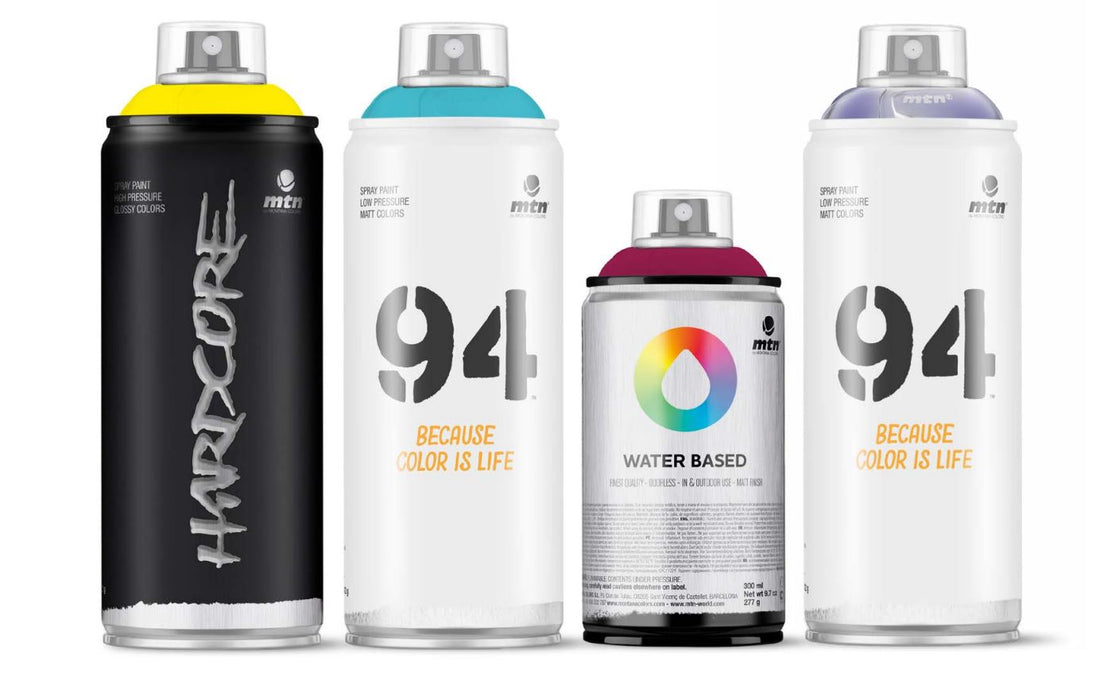
Ideal for Detail and Mural Work: Graffiti muralists and anyone doing piece production often prefer low pressure cans (examples include MTN 94 or Molotow Flame Blue). The ability to slowly blend colours or add highlights and shadows is much better with low pressure. You can feather the spray and build up colour gradually.
-
Requires Technique for Fills: The downside is fills can be slower. If you’re trying to fill a large area with a low pressure can, you might need to swap to a fat cap or be prepared for a bit more work. However, many low-pressure cans can still do decent fills – it just takes a little longer or a cap change.
-
Beginner Friendly: If you’re new to spray painting, low pressure cans can be a blessing. They are less prone to sudden drips because the paint isn’t blasting out. You get some leeway to improve your can control. Many newbies start with low pressure to practice steady lines.
-
Popular Low-Pressure Lines: As mentioned, MTN 94 is a prime low-pressure example (with its buttery smooth control). Also, Montana Gold (from a different Montana brand) is low pressure and known among street artists. Molotow’s Flame Blue is another low-pressure line geared for finesse. These cans are designed to give you precision.
In summary, low pressure = control. It’s perfect when you need accuracy, clean details, or are simply taking your time to create something with a lot of line work or blending.
High-Pressure Spray Paint
High-pressure spray paint cans push out paint fast and furious. Here’s what you need to know about high pressure:
-
Faster Coverage: High pressure means the paint is expelled with greater force and volume. If you hold down the cap, a lot of paint comes out quickly. This makes high-pressure cans the king for fast coverage – you can fill large spaces extremely quickly or spray a thick line in one pass. Think of it as a fire hose compared to a garden hose.
-
Thick Lines & Bombing: Because of the strong output, even with a stock or medium cap, you’ll get relatively wide lines and some overspray. High-pressure cans excel for bombing, throw-ups, and tags, where perfection isn’t the goal – speed is. A high-pressure can with a fat cap can cover a big throw-up outline or fill almost as fast as you can move your arm.
-
Needs Confident Handling: The trade-off for that speed is less inherent control. If you linger too long in one spot, drips will happen because so much paint is coming out. High-pressure cans reward a confident, quick hand. You have to keep moving and perhaps stand a tad farther back for outlines to avoid runs. Experienced writers often use quick wrist motions to cut lines with high-pressure paint.
-
Great for Certain Effects: If you want flares (the classic calligraphic flare tags) or very thick, expressive lines, high pressure is your friend. The force can create nice flare effects at the end of strokes, which some graffiti styles call for. It’s also useful for high-impact strokes in artwork where you don’t mind a bit of spray variance.
-
Examples of High-Pressure Lines: MTN Hardcore is a well-known high-pressure paint – built for those quick actions. Molotow Burner and Flame Orange are also high-pressure; they’re made for high coverage and speed. Another is Dope cans (like Dope Nitro), which are pressurized to pump out paint fast. These are the cans people grab when doing trackside bombs or big wall fills in limited time.
-
Managing High Pressure: You can moderate a high-pressure can by using a skinny cap to somewhat lessen the paint flow for detail work, but it will still feel more forceful than a true low-pressure can. Conversely, you can turbocharge a low-pressure can by using a super fat cap, but it won’t be quite as fast as a true high-pressure can with the same cap.
In a nutshell, high pressure = speed and force. It’s the go-to when you need to get paint on the wall quickly or want those big bold lines.
Which One Should You Choose?
Both high and low pressure cans have their place, and many artists use both depending on the task:
-
Use Case – Fine Art vs Street Bombing: For a detailed mural or canvas, low pressure gives you precision and control. For a quick street piece or throw-up, high pressure lets you paint fast and get out before anyone notices.
-
Line Work vs Fill-Ins: If you’re doing line work, outlines, or anything that requires accuracy, low pressure will feel easier. For filling in large letters or backgrounds, high pressure saves you time. Some writers even use a hybrid approach: e.g., fill large areas with high pressure cans and do the outlines/details with low pressure cans.
-
Skill Level: Beginners might want to start low and gradually work up to high. As you gain confidence, high-pressure cans become easier to handle. If you jump straight into high pressure with no experience, expect a bit of a learning curve (and some drips).
-
Environment: Consider the environment too. Windy day? Low pressure might blow around less paint (less overspray blowing off target). Cold weather? High pressure can sometimes perform better in the cold by forcefully ejecting thicker paint.
-
Versatility: It’s perfectly fine (even common) to keep a mix. For example, keep some MTN 94 (low pressure) for outlines and detailed sections, and some MTN Hardcore or Flame Orange (high pressure) for big fills or backgrounds. Match the tool to the task.
Beyond Pressure: Other Factors
Pressure is a major factor, but remember, cap choice can tweak how any can performs. A low pressure can with a fat cap can mimic some traits of high pressure, and a high pressure can with a skinny cap can be tamed slightly. Also, paint formula matters – some brands have very thick paint that might behave differently. Always feel free to experiment with caps and brands to find your sweet spot.
Conclusion
Understanding the difference between high vs low pressure spray paint empowers you to choose the right can for every scenario. In graffiti and street art, sometimes you need the surgical precision of a low-pressure can, and other times you need the racing speed of a high-pressure can. Now that you know the strengths of each, you can stock up accordingly. Whether you’re outlining a detailed character (reach for that low pressure can) or bombing a wall in record time (high pressure all the way), having the right pressure will make your job easier and your results cleaner. Both types are readily available at Paintbox – so why not experiment with each and see how they elevate your graffiti game?