

Murals vs Billboards: Which Works Harder for Your Brand?
If you've got budget for out-of-home, the obvious buy is poster sites. The other option is to get a wall painted. Both put your brand on the street, but they do very different jobs. Here's an honest comparison from a London studio that paints walls for a living, including when we'd tell you to buy the billboard instead.
The short answer
Billboards win on scale, speed and a measured audience. Murals win on attention, credibility and the content they create. If you need the same message on hundreds of sites next fortnight, buy posters. If you want people to stop, film it and talk about it, paint a wall. Plenty of the best campaigns do both.
How a billboard campaign works
Poster sites and digital screens are bought from media owners, usually in two-week slots. You supply the artwork, it gets printed or uploaded, and it goes up across as many sites as the budget covers. In the UK, out-of-home audiences are estimated through Route, the industry's shared measurement system, so you know roughly how many people a campaign should reach before you buy it.
That's the big strength: it's predictable, it scales nationally, and on digital screens you can change the creative almost overnight. The trade-off is that your poster sits in the same frame as everyone else's, and when the booking ends, it's gone.
How a painted mural works
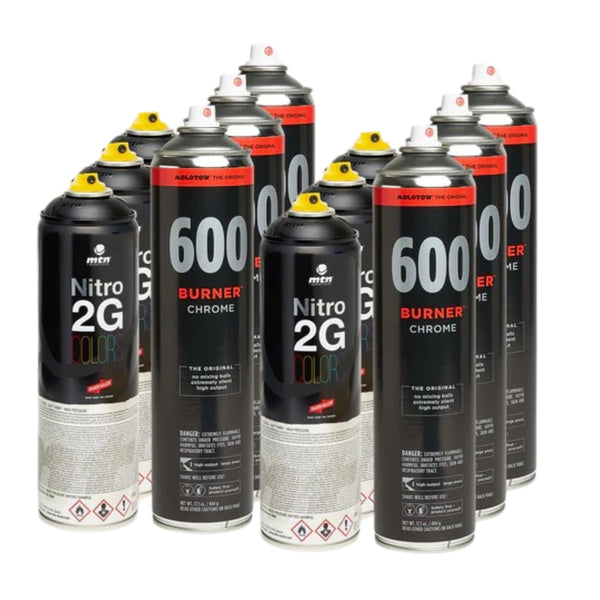
Graffiti or mural advertising means painting your message by hand, usually in spray paint, on a wall, shutter, hoarding or freestanding board. The wall might be a campaign site in a busy area, your own building, or a board built for an event. The design is drawn for that exact surface, signed off, then painted over one or more days, often in full view of the street.
Because it's painted rather than pasted, every one is a one-off. It can run for a few weeks as a campaign wall or stay for years on your own shopfront. It does need more groundwork up front: the wall owner's agreement and, for advertising, sometimes advertisement consent from the council. We've covered that in do you need permission to paint a mural in London?

Murals vs billboards, side by side
| Billboard | Painted mural | |
|---|---|---|
| Attention | Competes with every other poster on the street | A one-off, and the painting itself draws a crowd |
| Credibility | Reads as an ad | Reads as part of the street, when it's done well |
| Content | The poster is the content | Timelapse, reveal, photos and fan posts |
| Measurement | Industry audience estimates before you buy | QR scans, offer codes, tags and video views |
| Speed | Quick to book at scale, digital creative can change overnight | Design, sign-off and paint days, so plan ahead |
| Scale | Hundreds of sites at once | One wall at a time, or a set, like 25 shutters on one street |
| Lifespan | Ends with the booking | Weeks on a campaign wall, years on your own premises |
| What you pay for | Rental per site per booking, plus print | Artist, design, materials and access, plus any wall fee |
What the research says
There isn't much independent research on mural advertising yet, so treat any numbers, including these, as a guide rather than gospel. The most quoted consumer study comes from Muros, a US art activation agency, which surveyed 837 American adults in 2022:
- Almost two in three said a local mural would catch their attention more than a billboard.
- 74% said a piece made by an artist feels more authentic than a celebrity endorsing a product.
- More than 41% had photographed a mural and shared it on social media, and 32% had looked up the brand behind a mural after seeing it.
- Almost 86% said they're more likely to buy from a brand that supports its local community.
It's self-reported and from the US, but it lines up with what we see on London walls. Closer to home, researchers at Warwick Business School found that London neighbourhoods with a higher share of photos tagged "art" saw bigger relative house price rises, and named New Cross and Deptford as areas going through art-led change. That's a link, not proof that the art caused it, but it shows how much art shapes the way a place is seen.
UK mural companies have started publishing attention studies of their own too. They're worth a read, with one caveat: the people running the study are the people selling the walls. Read them the way you'd read this post.
When a billboard is the better buy
- You need national reach, or the same message in lots of cities at once.
- You're running a short, time-sensitive offer and need to swap the creative quickly.
- Your media plan needs audience figures agreed before you spend.
- You have days, not weeks, to get something live.
When a mural is the better buy
- You're launching in a specific neighbourhood and want to look like you belong there.
- Your brand trades on culture, craft or street credibility, and a poster would undersell it.
- You've got an event, and painting live gives people something to watch and film.
- You own or rent the wall, such as a shopfront, shutter, venue or office, so there's no media cost to renew.
- You want the content as much as the wall itself.
Or do both
The two work well together. Paint one hero wall, film it going up, then run the finished artwork and the timelapse across posters, screens and social. Muros made the same point in its survey write-up: footage of a mural being made can feed every other part of a campaign. You get the credibility of the painted piece and the reach of a poster buy.
What it's looked like on our walls
- New York Jets, Flat Iron Square. Jimmy C painted a 2m x 4m London x NYC mural live across the day, while our artists customised 300 tote bags for fans. Read the case study →
- Deptford High Street. 25 shutters for 25 local businesses with Shapes Lewisham, backed by Lewisham Council and now a stop on our graffiti tour. Read the Deptford story →
- The Jerk Shac. A shutter by Master Skosh whose reveal post passed 15,000 views on Instagram. See the shutter →
- Popeyes, Shepherd's Bush. Live-painted canvases and a stencil station customising totes and tees for 300 guests. Read the case study →
What does a mural cost?
It depends on the wall, the artist and the access. As a guide, a hand-painted shop shutter with us starts from £500 and goes up to around £1,500 for photorealistic work (see our shutter price guide). Campaign walls, building facades and live activations are quoted on the brief: the size of the wall, the artist, design time, scaffolding or lifts, and any fee to the wall owner all go into the price.
The bigger difference from a billboard is what you're paying for. With posters you rent space for a set period. With a mural on your own premises you pay once, and the wall keeps working.
How to measure a painted wall
- Put a QR code or an offer code on the wall. Our own wall on Frankham Street in Deptford, painted by Zomby, carries the shop address and a QR code.
- Track tags, mentions and location check-ins.
- Count views on the timelapse and reveal videos.
- For a shop or venue, compare footfall or sales before and after.
Thinking about a painted campaign?
Tell us the brief, the area and the date, and we'll come back with an idea, the right artist from our network and a price. You can also read why graffiti advertising works, see our hand-painted advertising formats, or grab the media kit.
Sources: Muros 2022 consumer survey (837 US adults aged 18 to 60, self-reported, unweighted). Seresinhe, Preis and Moat, Quantifying the link between art and property prices in urban neighbourhoods, Royal Society Open Science, 2016.